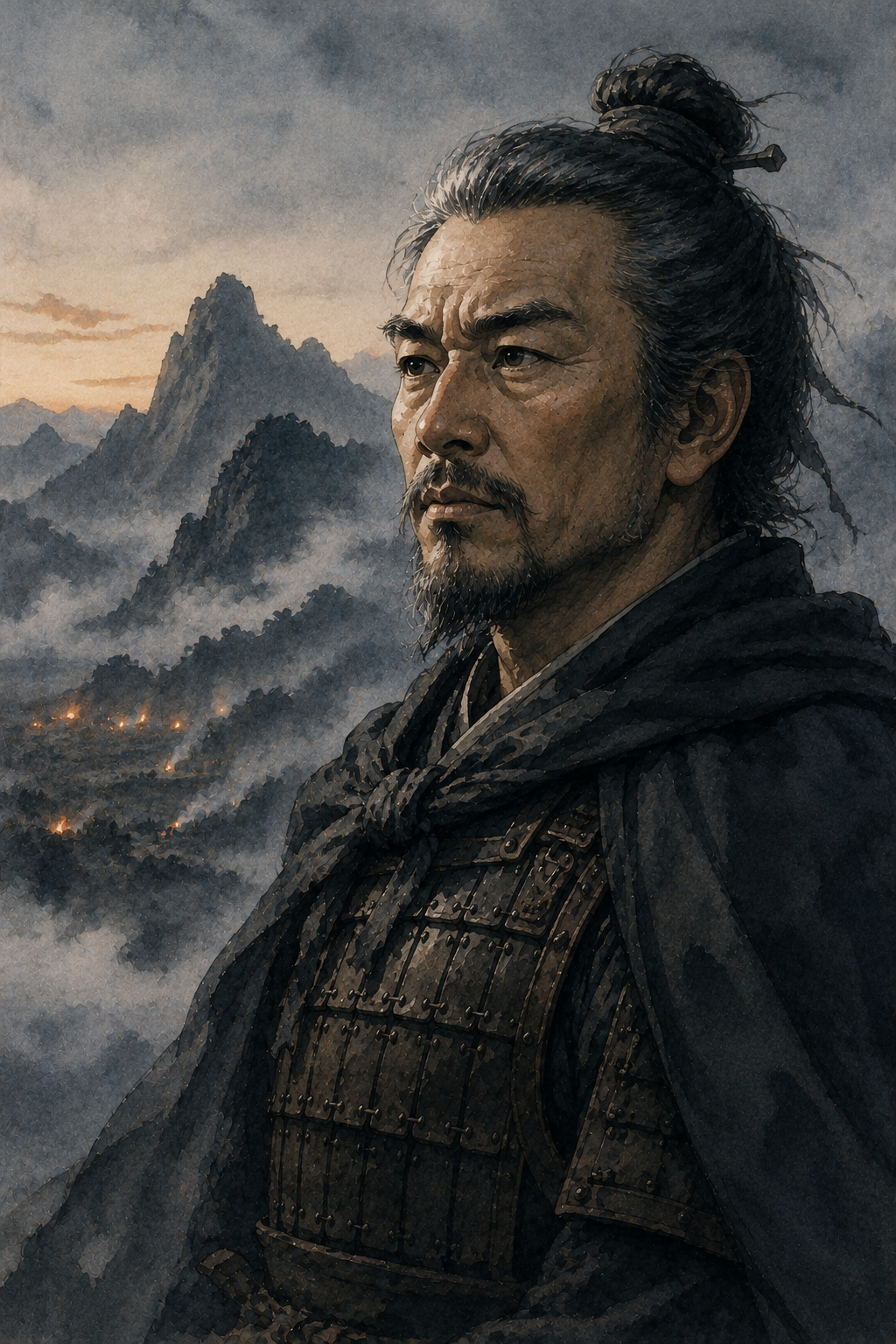
“The best victory is when the opponent never knew they lost.”
Talk to Sun Tzu →The Person
Sun Tzu, known in Chinese as Sun Wu (孙武), lived in the late Spring and Autumn period (c. 544–496 BCE) and served King Helü of Wu as a general and military strategist. He is credited with writing The Art of War (《孙子兵法》), a text that has shaped military thinking for over two millennia. Unlike most generals, Sun Tzu never glorified battle. He saw war as a failure of strategy, a last resort that should be won before it begins. His legacy is not a record of conquests but a system for avoiding unnecessary conflict: assess the terrain, calculate the costs, and never fight a battle you can't win without fighting at all. Today, Sun Tzu is read not on battlefields but in boardrooms, courtrooms, and startup offices. His framework—the Five Constants (道、天、地、将、法) and Seven Calculations—offers a cold, structural lens for any high-stakes situation: competition, negotiation, career moves, or political maneuvering. He doesn't care about your feelings. He cares about your position, your supply lines, and your odds. That precision is why a 2,500-year-old military manual remains one of the most practical philosophy books for modern professionals.
Core Teachings
The highest form of victory is making the other side surrender without a single clash. In business, that means building such a strong position that competitors don't bother attacking.
Before any move, assess five factors: mission, weather, terrain, leadership, and discipline. Then run seven numerical checks—who has more resources, more training, more stable command? It's a pre-game audit for any decision.
Half the battle is knowing your own weaknesses. The other half is knowing theirs. Most failures come from ignorance on one side or the other—not from bad luck.
Water is soft, but when it flows from a height, it moves boulders. 'Shi' is the power of positioning—not brute force, but being in the right place at the right time so gravity does the work.
Famous Lines
兵者,诡道也。
War is the art of deception—not lying, but making your position invisible until it's too late for the other side.
— For when you're in a negotiation or competition and need to keep your real intentions hidden.
上兵伐谋,其次伐交,其次伐兵,其下攻城。
The best move is to attack the other side's plan. Next, attack their alliances. Next, attack their army. The last resort is attacking their walls.
— For when you're deciding how to escalate—or whether to escalate at all.
知彼知己,百战不殆。
Know the other side and know yourself, and you'll survive a hundred battles without defeat.
— For when you're about to make a big move and haven't done the homework on either side.
Where The Tension Lives
Ask Sun Tzu When
- 01Career Maneuvers
You're up for a promotion and a colleague is blocking you—how do you assess the terrain and your odds before making a move?
- 02Business Competition
A competitor just dropped prices and you're tempted to retaliate—what's the real cost of that fight?
- 03Difficult Decisions
You're stuck between two bad options and can't see a clear path—how do you step back and evaluate the structure of the problem?
Now · You Have Questions
Talk to Sun Tzu →